
How Temperature-Sensitive Shipments Should Be Handled
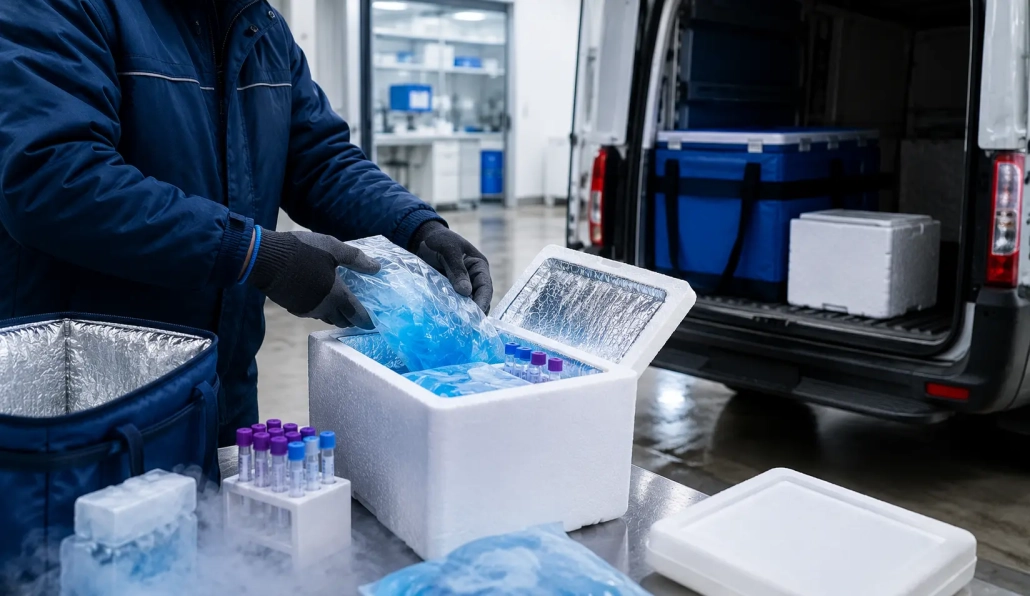
Temperature-sensitive shipments require far more planning and attention than standard packages. When a shipment can be damaged by excessive heat, freezing temperatures, or uncontrolled temperature fluctuations, every stage of transportation matters—from packaging and pickup to storage, transit, monitoring, and final delivery.
This is particularly important in industries such as healthcare, pharmaceuticals, biotechnology, laboratories, food and consumer products, and other sectors that depend on maintaining product quality throughout the supply chain.
A shipment may arrive at its destination on time, but if it has been exposed to inappropriate temperatures along the way, it may no longer be usable. For medical specimens, biological materials, pharmaceuticals, and other sensitive products, temperature control can directly affect product integrity, testing accuracy, safety, and operational continuity.
Businesses looking for temperature-controlled shipping in Marietta, GA, medical courier services in Georgia, or reliable logistics solutions throughout the Southeast need a transportation partner that understands these requirements.
City Express Inc. provides customized courier and logistics solutions for temperature-sensitive biological materials, pharmaceuticals, medical specimens, and other time-sensitive shipments. The company also offers temperature-controlled storage at its Marietta facility and customized transportation solutions for healthcare and other industries.
What Are Temperature-Sensitive Shipments?
Temperature-sensitive shipments are products or materials that must remain within a specified temperature range during transportation and storage.
Unlike ordinary shipments, these products can be affected by environmental conditions. Exposure to temperatures outside the required range may cause degradation, contamination, reduced effectiveness, or other forms of damage.
Examples can include:
- Pharmaceuticals
- Vaccines
- Biological materials
- Medical specimens
- Blood samples
- Tissue samples
- Laboratory materials
- Certain chemicals
- Temperature-sensitive consumer products
- Specialty healthcare products
- Certain food and beverage products
The exact temperature requirements depend on the product. Some shipments need refrigerated conditions, while others may require frozen or controlled room-temperature environments.
Because requirements vary, businesses should determine the appropriate handling conditions before a shipment is prepared for transportation.
Why Temperature Control Matters
Temperature control is not simply about keeping a package “cold.”
The goal is to maintain the appropriate environmental conditions for the entire shipment journey.
For example, a pharmaceutical product that requires controlled temperatures may be exposed to extreme heat while sitting in a loading area, inside an improperly prepared vehicle, or during an extended delivery delay.
Similarly, a biological specimen may need to remain within a defined temperature range to preserve its integrity for laboratory testing.
City Express notes that medical specimens and biological materials can require temperature-controlled environments because temperature fluctuations can compromise specimen integrity.
For businesses, this means temperature-sensitive logistics should be treated as a complete supply chain process rather than simply a delivery service.
Step 1: Identify the Temperature Requirements
The first step in handling a temperature-sensitive shipment is understanding its requirements.
Before transportation begins, the shipper should determine:
- Required temperature range
- Maximum allowable exposure time
- Minimum and maximum temperature limits
- Packaging requirements
- Handling instructions
- Storage requirements
- Delivery timeframe
- Monitoring requirements
- Applicable transportation regulations
Different products have different requirements. A shipment that needs refrigeration should not automatically be treated the same as one requiring frozen transportation.
Clear instructions help the logistics provider determine the appropriate vehicle, packaging, storage, route, and delivery method.
Step 2: Use Appropriate Packaging
Proper packaging is one of the most important components of temperature-sensitive shipping.
Packaging should be selected based on the product’s temperature requirements and expected transportation conditions.
Depending on the shipment, temperature-controlled packaging may include:
- Insulated shipping containers
- Thermal liners
- Refrigerant packs
- Dry ice
- Temperature-controlled containers
- Specialized pharmaceutical packaging
- Protective secondary packaging
- Temperature monitoring devices
Packaging must also protect the contents from physical damage.
Temperature control alone is not enough if a shipment is exposed to excessive vibration, impact, contamination, or mishandling.
For medical and laboratory shipments, packaging must also meet applicable safety and regulatory requirements.
Step 3: Prepare the Shipment Correctly
Even the best packaging cannot compensate for poor preparation.
Temperature-sensitive shipments should be prepared according to established handling procedures before the courier arrives.
This may involve:
- Preparing the product at the required temperature.
- Selecting the appropriate packaging.
- Pre-conditioning cooling materials when necessary.
- Placing the product securely inside the container.
- Adding required temperature monitoring equipment.
- Sealing the package properly.
- Applying appropriate labels.
- Preparing required documentation.
- Confirming the pickup and delivery information.
Preparation should be completed before pickup to reduce the amount of time the shipment spends outside its required environment.
Step 4: Minimize Temperature Exposure During Pickup
The pickup process is an important part of the cold chain.
Temperature-sensitive shipments should not be left sitting unnecessarily on loading docks, in warehouses, or in uncontrolled environments.
A well-planned pickup should minimize the time between preparation and placement into appropriate transportation or storage.
This becomes especially important during hot weather.
For businesses operating in Marietta, Georgia, and throughout the Southeast, summer temperatures can create additional challenges for temperature-sensitive shipments. Vehicles, parking areas, loading docks, and other environments can become significantly warmer than the required temperature range.
Planning efficient pickups can help reduce unnecessary exposure.
Step 5: Select the Right Transportation Method
Not every temperature-sensitive shipment requires the same type of transportation.
The appropriate transportation method depends on factors such as:
- Shipment size
- Temperature requirement
- Distance
- Delivery deadline
- Product value
- Sensitivity
- Packaging
- Destination
- Number of stops
- Regulatory requirements
For urgent medical or pharmaceutical shipments, an expedited courier may be necessary.
For recurring transportation, a dedicated route may provide greater consistency.
For larger distribution requirements, temperature-controlled transportation may be integrated with warehousing and fulfillment.
City Express provides scheduled, urgent, next-day, and next-flight-out transportation options for medical supplies and specimens, allowing healthcare organizations to customize transportation around shipment requirements.
Step 6: Maintain Temperature During Transit
Once a shipment is in transit, temperature control must continue.
A shipment should not be considered protected simply because it was packaged correctly.
Transportation conditions can change because of:
- Outdoor temperatures
- Traffic delays
- Vehicle loading
- Route changes
- Multiple stops
- Equipment issues
- Extended wait times
- Unexpected delivery delays
For this reason, transportation planning should account for potential disruptions.
City Express offers customized courier services for temperature-controlled biological materials and other time-sensitive shipments, with solutions designed around specific business requirements.
Step 7: Monitor Temperature When Required
Temperature monitoring provides greater visibility into shipment conditions.
Depending on the product and requirements, temperature monitoring can include data loggers, sensors, or other monitoring devices.
These technologies can record temperature conditions during transportation and provide valuable information if a shipment experiences a temperature excursion.
Modern bioshipping solutions increasingly use temperature sensors and data loggers to monitor conditions throughout transportation. City Express also highlights real-time tracking and traceability as important components of sensitive medical logistics.
Monitoring can help businesses determine whether a shipment remained within its acceptable range and identify potential problems during the transportation process.
Step 8: Plan Routes Carefully
Route planning is particularly important for temperature-sensitive shipments.
A delivery route should account for:
- Distance
- Traffic
- Delivery windows
- Number of stops
- Pickup times
- Temperature requirements
- Facility operating hours
- Potential delays
For example, an urgent medical specimen traveling across Marietta, Atlanta, and surrounding Georgia communities may require a different transportation plan than a routine scheduled delivery.
The objective is not simply to find the shortest route. The objective is to create a transportation plan that balances speed, reliability, safety, and temperature-control requirements.
Step 9: Reduce Unnecessary Handling
Every additional handling point can introduce risk.
Temperature-sensitive shipments should be handled as efficiently as possible.
Unnecessary transfers between vehicles, facilities, or storage areas can increase the amount of time a shipment spends outside controlled conditions.
Businesses should work with logistics providers that understand the importance of minimizing unnecessary handling.
This is particularly important for:
- Laboratory specimens
- Pharmaceuticals
- Biological materials
- Vaccines
- Medical equipment
- Specialty healthcare products
City Express has more than 20 years of experience supporting healthcare organizations, laboratories, manufacturers, distributors, and other businesses throughout Georgia and the Southeast.
Step 10: Use Temperature-Controlled Storage When Necessary
Temperature control does not stop when a shipment reaches a warehouse.
If a temperature-sensitive product needs to be stored before final delivery, the storage environment must also meet its requirements.
City Express operates an approximately 8,000-square-foot facility in Marietta with temperature-controlled storage rooms, pallet racking, shelving, forklift equipment, controlled access, and 24/7 staffed operations.
This can be particularly useful for businesses that need to combine:
- Temperature-controlled storage
- Inventory management
- Order fulfillment
- Pick and pack
- Regional distribution
- Same-day delivery
- Last-mile transportation
Combining these services can reduce the number of separate logistics providers a business needs to coordinate.
Temperature-Sensitive Pharmaceutical Shipments
Pharmaceutical products require careful transportation because temperature excursions can potentially affect product quality and effectiveness.
Pharmaceutical manufacturers, pharmacies, healthcare providers, and other organizations may need specialized transportation for medications, samples, and other temperature-sensitive products.
City Express specifically states that it provides temperature-controlled vehicles for sensitive medications and supports different transportation options, including STAT and scheduled services.
For pharmaceutical logistics, businesses should consider:
- Required temperature range
- Appropriate packaging
- Secure handling
- Delivery urgency
- Temperature monitoring
- Chain of custody
- Regulatory requirements
- Real-time shipment visibility
Temperature-Sensitive Medical Specimens
Laboratory specimens can also be highly sensitive to transportation conditions.
Blood samples, tissue cultures, and other specimens may require specific handling and temperature conditions to preserve their integrity.
Poor transportation practices can contribute to degradation or unreliable laboratory results.
City Express provides medical specimen transportation services and emphasizes specialized handling, secure transportation, and temperature-controlled shipping solutions for sensitive specimens.
For healthcare organizations, a reliable medical courier can become an important part of the diagnostic process.
The Importance of Chain of Custody
For many medical shipments, temperature control is only one part of the transportation process.
Chain of custody is also important.
A clear chain of custody helps establish who handled a shipment, when it was picked up, where it was transported, and when it was delivered.
This can improve accountability and traceability.
Businesses may use:
- Pickup documentation
- Delivery confirmations
- Digital signatures
- Tracking systems
- Temperature records
- Shipment identification numbers
- Time stamps
These records can provide greater visibility throughout the shipment’s journey.
What Happens During a Temperature Excursion?
A temperature excursion occurs when a shipment is exposed to temperatures outside its acceptable range.
When this happens, the appropriate response depends on the product, temperature limits, duration of exposure, manufacturer instructions, and applicable procedures.
Businesses should not automatically assume that a shipment is safe or unsafe based solely on the fact that an excursion occurred.
Instead, they should follow the product-specific procedures established by the manufacturer, laboratory, healthcare organization, or responsible authority.
A logistics provider should also document the event and provide relevant shipment information to the appropriate stakeholders.
Temperature monitoring can be particularly valuable because it provides evidence of the conditions experienced during transportation.
Common Mistakes to Avoid
Businesses handling temperature-sensitive shipments should avoid several common mistakes.
Using Standard Packaging
Ordinary cardboard packaging may not provide sufficient temperature protection.
Ignoring Weather Conditions
Extreme heat or cold can create additional transportation risks.
Delaying Pickup
Leaving temperature-sensitive products in uncontrolled environments can compromise shipment integrity.
Choosing a Carrier Based Only on Price
The lowest delivery price does not necessarily represent the lowest overall logistics cost if shipments are damaged or rejected.
Failing to Monitor Temperature
Without monitoring, it may be difficult to determine whether a shipment experienced a temperature excursion.
Using Unclear Handling Instructions
Drivers and warehouse employees need clear information about how the shipment should be handled.
Planning Routes Without Considering Time
A route that looks efficient geographically may not be appropriate if traffic or multiple stops create unacceptable transit times.
Choosing a Temperature-Sensitive Logistics Partner
When selecting a logistics provider, businesses should look beyond basic courier capabilities.
Ask whether the provider can support:
- Temperature-controlled transportation
- Temperature-controlled storage
- Medical courier services
- Pharmaceutical delivery
- Biological material transportation
- Laboratory specimen transportation
- Scheduled deliveries
- Urgent deliveries
- Same-day transportation
- Next-day transportation
- Real-time tracking
- Customized logistics solutions
Experience with the specific industry is also valuable.
A healthcare organization, for example, may have very different requirements from an e-commerce company shipping temperature-sensitive consumer products.
Why Businesses in Marietta, GA Need Reliable Temperature-Controlled Logistics
For companies operating in Marietta, GA, Atlanta, and surrounding Georgia communities, reliable local transportation can play an important role in maintaining temperature-sensitive supply chains.
Local courier services can help reduce unnecessary transportation delays while providing flexible pickup and delivery options.
At the same time, businesses serving customers across the Southeast may need a logistics partner capable of supporting regional distribution.
City Express operates from Marietta and provides courier, healthcare transportation, warehousing, fulfillment, dedicated transportation, and final-mile delivery services throughout the metro area and Southeast. (City Express Inc.)
This combination allows businesses to create logistics programs around their actual requirements rather than relying on a generic shipping model.
Best Practices Checklist for Temperature-Sensitive Shipments
Before sending a temperature-sensitive shipment, businesses should verify:
- Temperature requirements are clearly identified.
- Packaging is appropriate for the shipment.
- Cooling or heating materials are properly prepared.
- Temperature monitoring is included when required.
- Labels and documentation are complete.
- Pickup and delivery times are confirmed.
- The transportation method matches the shipment requirements.
- The route has been reviewed for potential delays.
- Storage conditions are appropriate.
- Chain-of-custody procedures are established when required.
- Delivery confirmation is obtained.
- Temperature records are retained when necessary.
A checklist can help reduce preventable errors and create greater consistency across repeated shipments.
Conclusion
Handling temperature-sensitive shipments requires a coordinated approach involving packaging, storage, transportation, route planning, monitoring, documentation, and timely delivery.
Whether a business is shipping pharmaceuticals, medical specimens, biological materials, or other temperature-sensitive products, maintaining the appropriate conditions throughout the journey is essential.
For businesses looking for temperature-controlled shipping in Marietta, GA, medical courier services in Georgia, pharmaceutical delivery services near Atlanta, temperature-controlled storage in Marietta, or customized logistics solutions throughout the Southeast, choosing an experienced logistics provider can simplify the process.
City Express Inc. provides customized courier and supply chain solutions for healthcare, pharmaceutical, laboratory, retail, manufacturing, and other industries. Its capabilities include temperature-sensitive transportation, medical specimen and supply delivery, pharmaceutical delivery, bio-shipping, temperature-controlled storage, scheduled routes, urgent courier services, fulfillment, and last-mile delivery.
With more than 20 years of experience and operations supporting businesses throughout Georgia and the Southeast, City Express can help businesses develop transportation and logistics solutions around their specific requirements.
When the condition of a shipment matters as much as its delivery time, temperature control should be treated as a critical part of the supply chain—not an afterthought.
To discuss temperature-sensitive transportation, medical courier services, pharmaceutical delivery, or temperature-controlled storage, contact City Express Inc. for a customized logistics solution.

Leave a Reply
Want to join the discussion?Feel free to contribute!